What actually destroys an industrial floor (and how much of it is cleaning)
Floors rarely fail from load. They fail from the fine abrasive material carried in every day and never removed, and from chemistry that strips the protective layer faster than anything restores it.
Published 6 min read
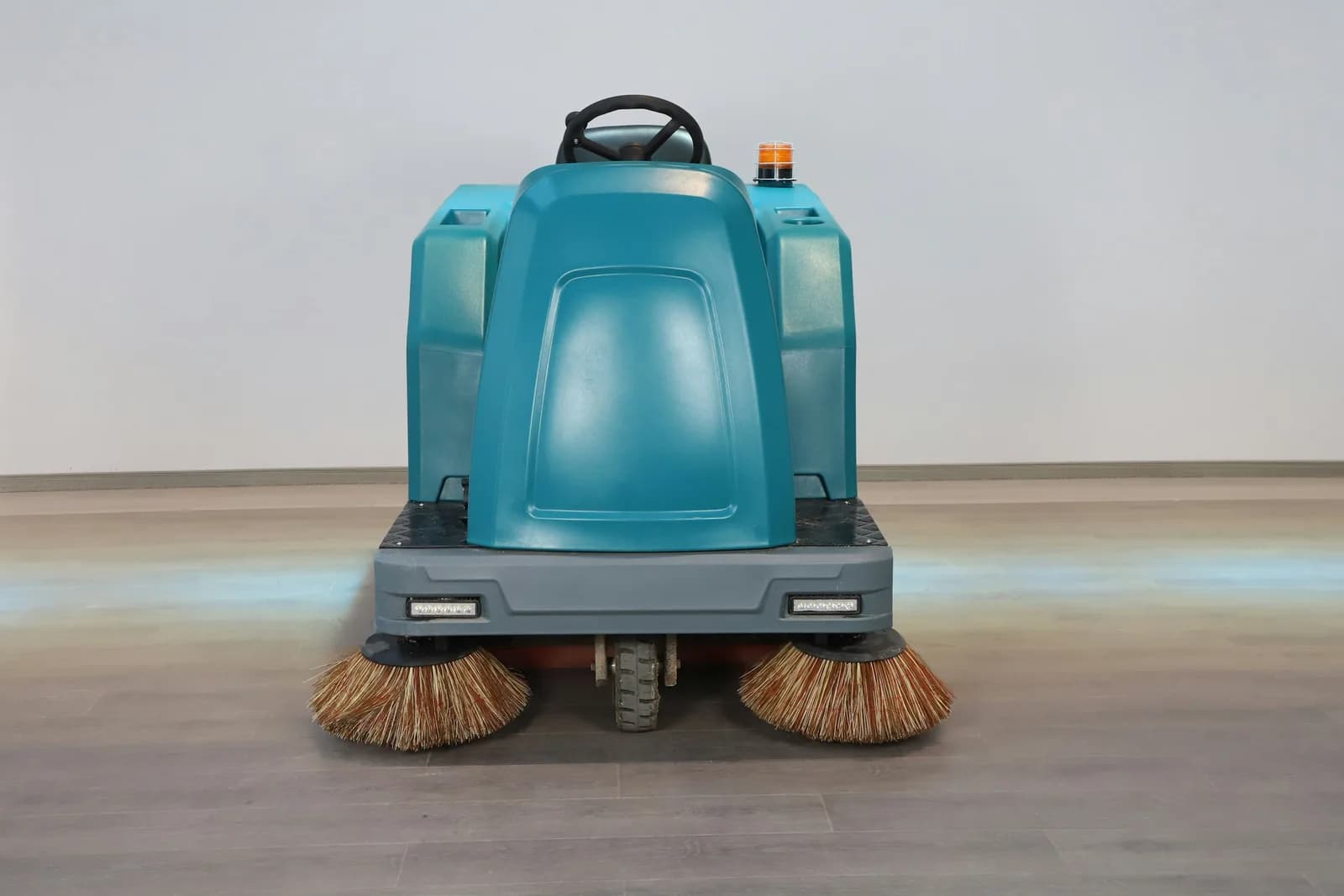
When a warehouse floor starts visibly failing, the first explanation is usually load: forklifts, pallets, traffic. That is rarely the cause. Concrete and resin floors in industrial buildings are specified for that load. What wears them down is smaller and duller than that.
Grit and fine particles work like sandpaper
Every vehicle and every person carries in fine abrasive material: sand, stone dust, road salt in winter, particles from the process itself. Under forklift wheels and shoe soles that material is ground across the surface and behaves exactly like sandpaper.
The protective layer, a coating or a power-floated concrete surface, is not thick. Once it is worn through, the more porous body underneath is exposed, which then absorbs oil and moisture and deteriorates much faster. Up to that point the repair was washing. After it, the repair is resurfacing or a new coating.
Most of the dirt arrives in the first few metres
By far the largest share of abrasive material comes in through the entrances. That means the entry zone and the area in front of the docks carry a disproportionate share of the problem and deserve a disproportionate share of the attention.
- Entrance matting of adequate length, washed regularly. A short mat does nothing.
- Clean the first metres from the entrance more often than the rest of the building.
- Maintain the outside approach and parking, a dirty approach means a dirty floor inside.
- Extra care in winter: grit and de-icing salt are strongly abrasive and chemically aggressive.
The wrong chemistry strips what protects the floor
The second common mistake is product choice. Strongly alkaline cleaners and aggressive degreasers give a fast visible result, but on coated and power-floated floors they strip the protective layer. The floor looks clean while it is in fact bare.
The opposite problem is products that leave a film. That film is tacky, it holds dust, and the floor soils faster than before. The usual response is to increase the dose, which makes it worse. It is an easy trap to fall into.
The rule is dull but it works: choose the product for the substrate, not for how strongly it acts. If you do not know the floor type, that is the first thing to establish. The coating manufacturer or the flooring contractor usually has the specification.
Standing water is a problem, not a result of washing
Washing that leaves water on the floor creates three problems at once: a slippery floor until it dries, moisture working into cracks and joints, and marks left behind when the water evaporates with the dissolved dirt still in it.
This is why scrubber-driers have a squeegee: they wash and recover the water in the same pass, leaving the floor almost dry. That is not a convenience but a functional requirement: the area returns to use immediately and moisture does not sit.
How to tell which problem you have
| What you see | Likely cause |
|---|---|
| Dull tracks along traffic routes | Abrasion, fine particles are not being removed |
| The floor soils faster than it used to | Film left by a residue-forming product |
| Dark stains that will not lift | Coating stripped, the substrate is absorbing |
| Streaks and marks after washing | Water drying on the floor, no recovery |
| Dust returns soon after sweeping | Sweeping without suction |
What is worth changing
In order of effect against cost: entrance zone and matting first, then removing the fine fraction instead of plain sweeping, then checking the chemistry against the floor type, then washing with recovery instead of wet mopping.
All four are cheaper than resurfacing, and resurfacing is cheaper than a new floor. The point of upkeep is to stay on the first level as long as possible.
Need a quote for your site?
Describe the property, we call you back within one business day and arrange a site visit.