Post-construction cleaning: why one pass is never enough
Construction dust is fine enough to stay airborne for hours and settle for days. That is why a site after building work is not cleaned once but in phases, with time left between them.
Published 8 min read
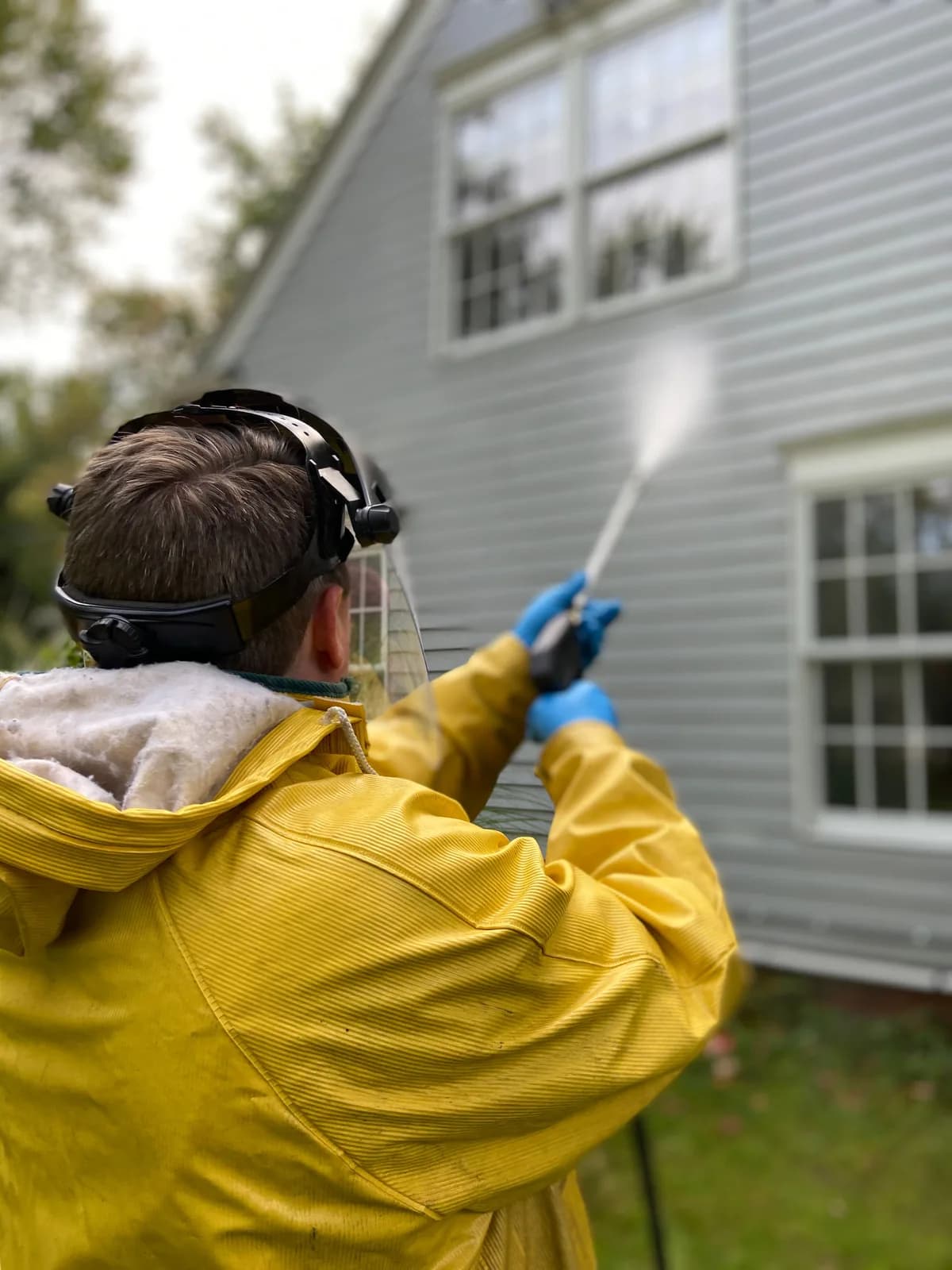
The usual sequence goes like this: the builders finish, the site is cleaned, equipment moves in the next day and everything is covered in dust again. The client thinks the cleaning was not done. The crew knows it was. Both are right.
Construction dust behaves differently from household dust. It comes from cutting, grinding and mixing, so the particles are far finer and lighter. They stay in the air long after the last hammer blow and then settle slowly. Cleaning a site while the dust is still falling means wiping a surface underneath a cloud that has yet to come down.
Post-construction cleaning runs in three phases
Splitting it into phases is not a way to charge more. It is the only way the result survives longer than a day.
| Phase | When | What gets done |
|---|---|---|
| 1. Rough clear | As soon as the builders leave | Removing rubble, packaging, leftover material, protective film and tape |
| 2. Main clean | After the rough clear | Vacuuming every surface top to bottom, floors, glass, joinery, sanitary ware |
| 3. Final pass | A day or two later at the earliest | Dust that settled in the meantime, detail work, pre-handover check |
The third phase is the one most often dropped from a quote to bring the price down, and it is the reason a site looks poor on handover day. If you have to save somewhere, do not save there.
Dust is vacuumed, not wiped
Dry wiping and ordinary sweeping lift the fine fraction into the air, from where it settles again. A damp cloth on plaster or cement dust makes a slurry that smears and leaves a mark that is hard to remove.
The order that works: vacuum every surface first, including walls, edges, radiators, the inside of cabinets and shelving, and only then go over anything wet. The vacuum needs a filter that actually holds fine dust, otherwise it just moves it from one part of the room to another.
Ventilation grilles and duct interiors are a separate problem. Dust sits in them and comes back out for months after occupation, every time the system starts. If the system ran during the works, this is worth checking before handover.
Material residue needs a different approach from dust
Dust is the easier half of the job. What takes the time is the spot residue that has already bonded to the substrate.
- Cement and grout haze on tiles, often invisible until the floor dries
- Adhesive and grout residue in joints and along edges
- Silicone and acrylic on glass, profiles and sanitary ware
- Paint and primer splashes on glass and floors
- Tape and protective film residue, especially where it sat in the sun
- Plaster scratches and marks on joinery
Each one needs its own technique and its own product. This is where most of the damage happens, because under deadline pressure people reach for whatever removes it fastest.
What damages newly installed surfaces
New surfaces are not the same as ones that have been in use for years. Grout cures for weeks, floor coatings reach full resistance only after some time, and the protective layer on joinery is thin. A product that would leave no trace on an old floor can do permanent damage to a new one.
| Practice | What it damages |
|---|---|
| Acidic cement-haze removers | Natural stone, marble, terrazzo, some grouts |
| Abrasive pads or wire wool | Glass, stainless steel, sanitary ware, lacquered joinery |
| Dry-scraping glass with a blade | Glass, permanently, the marks do not come out |
| Strongly alkaline products | New floor coatings, aluminium |
| Wet washing too early | Fresh grout, wood flooring, newly laid finishes |
Before anything goes onto a large area, test the product somewhere hidden and let it dry. That is a few minutes spent to avoid replacing a finish.
Who cleans what: the boundary with the builder
This is rarely written down and almost always becomes a dispute. Two different things both get called cleaning.
- Site clearance: removing rubble, packaging, surplus material and tools. As a rule the builder's obligation.
- Cleaning for occupation: dust, glass, detail work, preparing for handover. The job of a specialist crew.
Without that line drawn, a cleaning crew arrives at a site full of rubble and loses a day on work that is not theirs, or nobody removes the material because everyone assumed it was the other party.
When to call and how to fit around everyone else
Cleaning is planned alongside the build programme, not after it. A few rules that save repeating the work:
- 1Call as soon as you know the approximate completion date, not once the works are already done.
- 2Check whether anyone comes after you: equipment installation, furniture, a move. If they do, the final pass goes after them.
- 3Make sure power and water are available on site. It sounds obvious and it is the most common obstacle.
- 4Agree where the waste goes and who provides the container.
- 5Leave a gap between the main clean and the final pass. A day or two, so the dust can fall.
- 6If the site is being handed over, schedule the last pass immediately before handover.
The pre-handover check
Dust shows best at an angle, not from above. Walk the site with a light held close to the surface and it appears immediately where a normal glance sees nothing.
- Top edges of doors, frames and cabinets
- Inside cabinets, drawers and shelving
- Radiators, behind and between the fins
- Window corners, tracks and the inside of frames
- Ventilation grilles and light fittings
- Under and behind anything that moves
- Approaches and stairwells, usually forgotten because they are not indoors
If that check turns up dust at height, it is not an oversight but a sign that it is still falling. Then you wait and do another pass. Rushing at that point is the one thing that reliably does not work.
Need a quote for your site?
Describe the property, we call you back within one business day and arrange a site visit.